

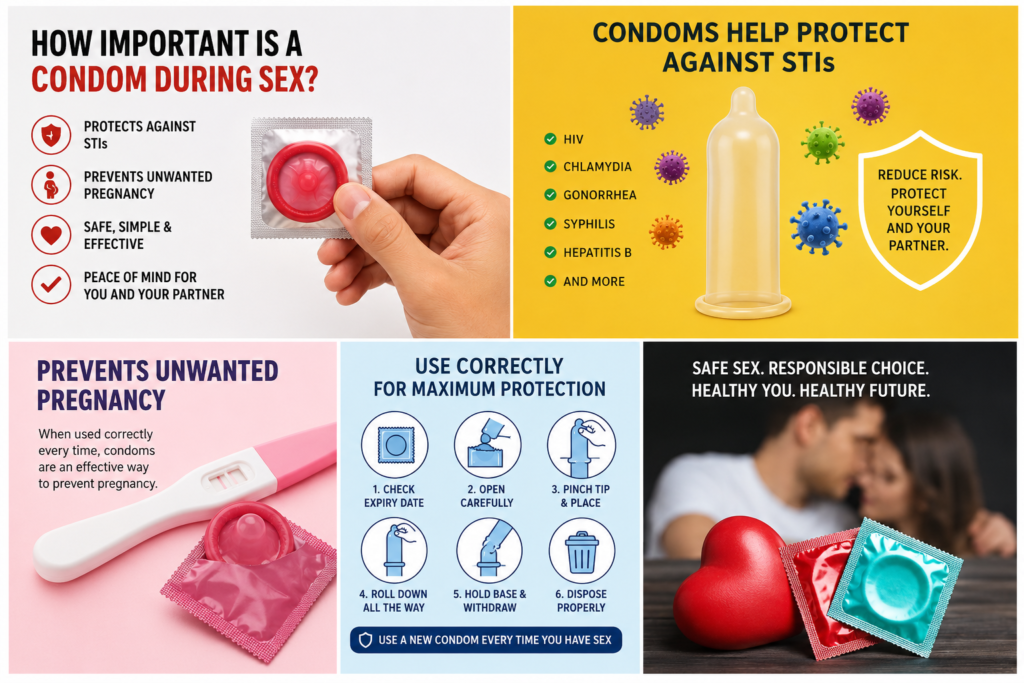
Sex is an important part of many healthy relationships, but it also comes with responsibilities. One of the simplest and most effective ways to protect yourself and your partner is by using a condom. Whether you’re in a new relationship, have multiple partners, or simply want extra protection, condoms play a vital role in promoting safer and healthier sexual experiences.
What Is a Condom?
A condom is a thin barrier, typically made from latex, polyurethane, or polyisoprene, that is worn over the penis (external condom) or inserted into the vagina (internal condom). Its primary purpose is to prevent the exchange of bodily fluids during sex, helping reduce the risk of sexually transmitted infections (STIs) and unintended pregnancy.
Why Are Condoms So Important?
1. Protection Against Sexually Transmitted Infections (STIs)

One of the biggest advantages of condoms is their ability to reduce the risk of many STIs, including:
- HIV
- Chlamydia
- Gonorrhea
- Trichomoniasis
- Hepatitis B
- Syphilis (risk reduced when sores are covered by the condom)
While condoms cannot eliminate the risk of every STI—especially those spread through skin-to-skin contact, such as HPV or genital herpes—they significantly lower the chance of transmission when used correctly.
2. Preventing Unintended Pregnancy
When used consistently and correctly, condoms are an effective method of contraception. They work by preventing sperm from entering the uterus, reducing the likelihood of pregnancy.
Many couples also choose to combine condoms with another form of birth control, such as oral contraceptive pills or an intrauterine device (IUD), for additional protection.
3. Peace of Mind
Knowing that you’re taking steps to protect both yourself and your partner can make intimacy more comfortable and enjoyable. Reduced anxiety about pregnancy or infections often leads to better communication and a more positive sexual experience.
Do Condoms Reduce Pleasure?

This is one of the most common myths about condoms. Modern condoms come in a wide variety of sizes, materials, and designs, including ultra-thin, textured, and lubricated options. Finding the right fit and type can help maintain comfort and sensitivity.
For many couples, the added confidence and sense of security outweigh any perceived reduction in sensation.
How to Use a Condom Correctly
To maximize protection:
- Check the expiration date.
- Ensure the package is undamaged.
- Open the wrapper carefully—avoid using teeth or sharp objects.
- Put the condom on before any genital contact.
- Pinch the tip to leave room for semen.
- Roll it all the way down the erect penis.
- Use a water-based or silicone-based lubricant if needed (especially with latex condoms).
- After ejaculation, hold the base while withdrawing.
- Dispose of the used condom in the trash—never reuse one.
Common Mistakes to Avoid
- Using two condoms at the same time (“double bagging”), which can increase friction and the chance of breakage.
- Reusing a condom.
- Using oil-based lubricants with latex condoms, as they can weaken the material.
- Putting the condom on after sexual activity has already begun.
- Storing condoms in places exposed to excessive heat, such as a car dashboard or wallet for long periods.
Who Should Use Condoms?
Condoms are recommended for:
- Individuals with new or multiple sexual partners.
- Couples who have not been tested for STIs.
- Anyone who wants protection against both pregnancy and STIs.
- Couples using another contraceptive method who want additional safety.
Even in long-term relationships, condom use may be appropriate depending on each partner’s health status, testing history, and family planning goals.
Are Condoms 100% Effective?
No contraceptive method is 100% effective. However, condoms are highly effective when used correctly every time you have sex. Incorrect or inconsistent use is the most common reason condoms fail.
Learning proper usage and choosing the correct size can significantly improve their effectiveness.
Choosing the Right Condom

There are many options available, including:
- Latex condoms
- Non-latex condoms for people with latex allergies
- Ultra-thin condoms
- Ribbed and textured condoms
- Lubricated condoms
- Larger or snug-fit sizes
Selecting a condom that fits comfortably can improve both protection and overall satisfaction.
Final Thoughts
Condoms remain one of the most accessible, affordable, and effective tools for safer sex. They help protect against many sexually transmitted infections while also reducing the risk of unintended pregnancy. Using condoms consistently and correctly demonstrates respect for both your own health and your partner’s well-being.
Safe sex begins with informed choices. Whether you’re entering a new relationship or maintaining a long-term one, making condoms a regular part of your sexual health routine is a simple step that can have lasting benefits.