

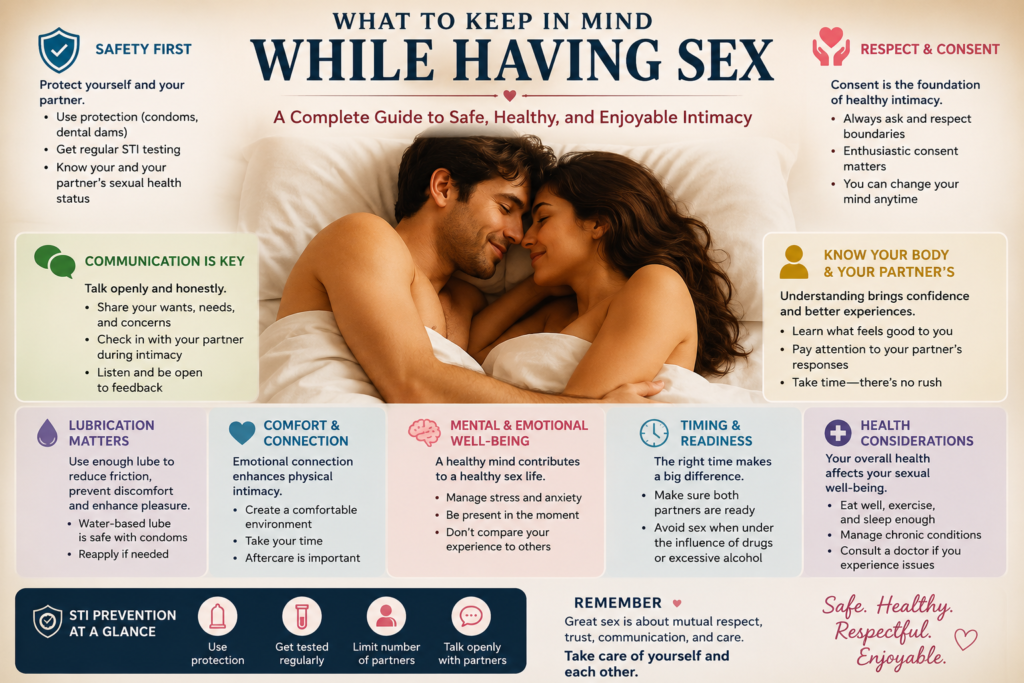
Sex is an important part of many romantic relationships and can contribute to emotional connection, physical well-being, and overall happiness. However, a satisfying sexual experience isn’t just about physical pleasure—it also involves communication, consent, respect, emotional readiness, and protecting both partners’ health.
Whether you’re in a new relationship or have been with your partner for years, understanding the essentials of healthy intimacy can make a significant difference. In this comprehensive guide, we’ll discuss everything you should keep in mind before, during, and after sex to ensure a safe, respectful, and fulfilling experience.
1. Consent Comes First
The foundation of any healthy sexual relationship is mutual consent.
Consent means that every person involved willingly agrees to participate in sexual activity without pressure, manipulation, fear, or intoxication. It should be enthusiastic, informed, and can be withdrawn at any point.
Remember:
- “Yes” means yes.
- Silence is not consent.
- Previous consent doesn’t guarantee future consent.
- Either partner can change their mind at any time.
Respecting boundaries builds trust and strengthens relationships.
2. Communicate Openly with Your Partner

Good communication improves intimacy.
Before becoming sexually active, discuss:
- Comfort levels
- Boundaries
- Expectations
- Preferences
- Contraception
- STI protection
During intimacy, continue checking in with your partner.
Simple questions like:
- “Is this okay?”
- “Do you like this?”
- “Would you like to continue?”
can make both partners feel respected and comfortable.
3. Prioritize Safe Sex
Protecting yourself and your partner should always be a priority.
Safe sex helps reduce the risk of:
- Sexually transmitted infections (STIs)
- HIV
- Unplanned pregnancy
Common protection methods include:
- Condoms
- Internal condoms
- Dental dams for oral sex
- Appropriate contraception
Using protection correctly every time significantly lowers health risks.
4. Understand Your Birth Control Options
If pregnancy prevention is important, don’t rely on guesswork.

Various contraceptive methods include:
- Condoms
- Birth control pills
- IUDs
- Implants
- Injections
- Vaginal rings
- Emergency contraception (when needed)
Discuss the best option with a healthcare provider based on your individual health and lifestyle.
5. Get Tested Regularly
Sexual health is an important part of overall health.
Regular STI testing is recommended if:
- You have multiple partners.
- You’re entering a new relationship.
- You have symptoms.
- You’ve had unprotected sex.
Many STIs have no symptoms, making routine testing essential.
Being honest about your sexual health helps protect everyone involved.
6. Personal Hygiene Matters
Good hygiene contributes to comfort and confidence.
Before sex:
- Shower if possible.
- Wash your hands.
- Wear clean underwear.
- Maintain oral hygiene if engaging in oral intimacy.
After sex:
- Urinate to reduce the risk of urinary tract infections.
- Clean the genital area gently with water.
- Avoid harsh soaps or scented products.
Maintaining cleanliness helps reduce irritation and infections.
7. Don’t Ignore Emotional Readiness
Sex isn’t just physical.
Ask yourself:
- Do I genuinely want this?
- Am I emotionally prepared?
- Do I feel safe with my partner?
- Am I making this decision for myself?
Feeling emotionally ready can lead to a healthier and more positive experience.
8. Respect Each Other’s Boundaries

Everyone has different comfort zones.
Respect:
- Personal limits
- Physical boundaries
- Emotional boundaries
- Privacy
Healthy relationships involve understanding that no one owes anyone sex.
Mutual respect creates lasting intimacy.
9. Avoid Pressure
No one should feel forced into sexual activity.
Pressure may include:
- Emotional manipulation
- Persistent requests after refusal
- Threats
- Guilt-tripping
Healthy intimacy is always voluntary.
10. Be Mindful of Alcohol and Drugs
Alcohol or recreational drugs can affect judgment, communication, and the ability to give or understand consent.
If someone is heavily intoxicated or unconscious, they cannot provide valid consent.
Making decisions while sober is generally the safest approach.
11. Don’t Compare Yourself to Pornography
Many people develop unrealistic expectations because of adult entertainment.
Porn often:
- Is scripted
- Uses editing
- Doesn’t represent real relationships
- Doesn’t reflect realistic bodies or experiences
Healthy intimacy focuses on mutual comfort, communication, and respect—not unrealistic performances.
12. Foreplay Is About Mutual Comfort
Physical intimacy doesn’t need to be rushed.
Taking time to connect emotionally and physically can help both partners feel relaxed and comfortable.
The goal is mutual enjoyment rather than following a specific timeline or expectation.
13. Listen to Your Body
If something hurts unexpectedly or feels uncomfortable, stop and communicate.
Pain during sex can sometimes indicate:
- Insufficient arousal
- Infection
- Medical conditions
- Irritation
Persistent pain should be evaluated by a healthcare professional.
14. Use Lubrication When Needed
Lubrication can reduce friction and improve comfort.
Depending on the type of protection being used, choose a compatible lubricant and follow product instructions.
If discomfort continues despite lubrication, consult a healthcare provider.
15. Stay Hydrated and Healthy
Overall health affects sexual wellness.
Healthy habits include:
- Drinking enough water
- Regular exercise
- Balanced nutrition
- Adequate sleep
- Managing stress
These factors can support energy, mood, and overall well-being.
16. Practice Mutual Respect

Healthy intimacy is based on equality.
Both partners deserve:
- Respect
- Privacy
- Kindness
- Honesty
- Patience
A respectful relationship leads to greater trust and emotional security.
17. Understand That Every Couple Is Different
There is no “normal” frequency for sex.
Some couples:
- Have sex frequently.
- Occasionally.
- Rarely.
- Choose not to have sex at all.
Healthy relationships are defined by mutual satisfaction rather than comparison with others.
18. Aftercare Is Important
The moments after intimacy can strengthen emotional bonds.
Aftercare may include:
- Talking
- Hugging
- Cuddling
- Asking how your partner feels
- Checking in emotionally
Simple acts of affection can deepen trust and connection.
19. Recognize Signs of an Unhealthy Relationship
Sex should never involve:
- Fear
- Coercion
- Violence
- Manipulation
- Threats
- Emotional abuse
If these are present, seeking support from trusted friends, family, or professional services can be important.
Healthy relationships are built on trust, respect, and safety.
20. Continue Learning About Sexual Health
Sexual health is a lifelong topic.
Reliable sources include:
- Licensed healthcare providers
- Public health organizations
- Educational institutions
Staying informed helps you make safer and healthier decisions.
Common Mistakes to Avoid
Many people unknowingly make mistakes that can affect both health and relationships.
Avoid:
- Ignoring consent
- Skipping protection
- Poor communication
- Neglecting STI testing
- Assuming your partner’s preferences
- Comparing your relationship to others
- Ignoring discomfort or pain
- Believing myths about contraception
- Relying solely on withdrawal for pregnancy prevention
- Avoiding conversations about sexual health
Benefits of Healthy Sexual Relationships
When based on mutual respect and communication, healthy sexual relationships may contribute to:
- Stronger emotional connection
- Greater relationship satisfaction
- Improved trust
- Better communication
- Reduced stress for some people
- Increased confidence
- Enhanced overall well-being
These benefits vary from person to person and depend on the quality of the relationship.
Frequently Asked Questions (FAQs)
Is communication really that important?
Yes. Honest communication helps partners understand each other’s boundaries, preferences, and expectations.
How often should couples get tested for STIs?
The recommended frequency depends on individual risk factors, relationship status, and healthcare guidance.
Can someone change their mind during sex?
Yes. Consent can be withdrawn at any time, and that decision should always be respected.
Why is protection important?
Protection helps reduce the risk of sexually transmitted infections and unintended pregnancy.
Is pain during sex normal?
Occasional discomfort can happen, but ongoing or significant pain should be discussed with a healthcare professional.
Final Thoughts
A healthy sexual relationship is built on much more than physical intimacy. It requires trust, mutual respect, open communication, informed decision-making, and attention to both emotional and physical well-being.
By prioritizing consent, practicing safer sex, maintaining good hygiene, communicating honestly, and respecting each other’s boundaries, couples can create experiences that are not only enjoyable but also safe and supportive. Every relationship is unique, and there is no single definition of a fulfilling sex life. The most important goal is ensuring that all partners feel respected, comfortable, and able to make informed choices.
When questions or concerns arise about sexual health, consulting a qualified healthcare professional is the best way to receive personalized guidance. Staying informed and caring for both yourself and your partner lays the foundation for a healthier, happier relationship.